
A Hurricane-Season Punch List for East Cooper Homes (What to Fix Before June 1)
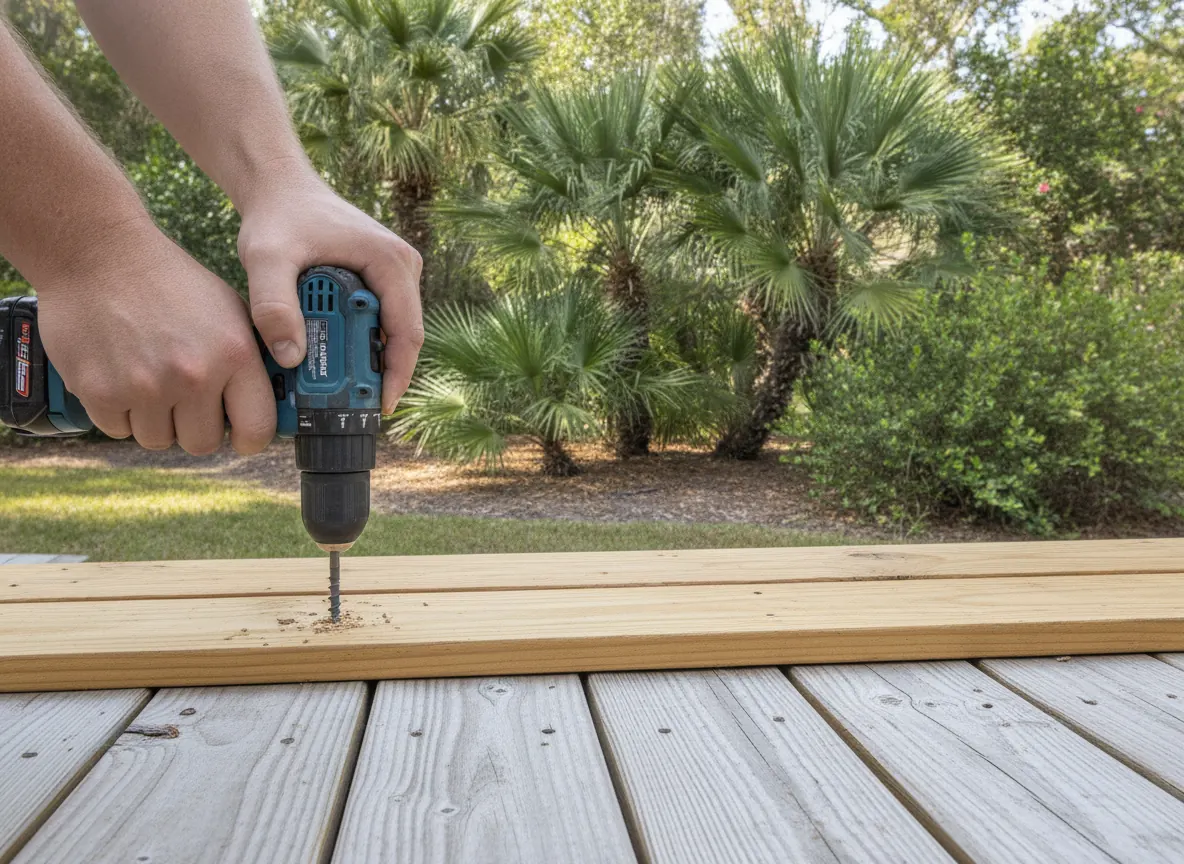
Hurricane season runs June 1 to November 30 and peaks around September 10, with most of the activity between mid-August and mid-October. The National Hurricane Center says an average season brings 14 named storms, 7 hurricanes and 3 major ones. Most of them never come near Charleston. The ones that do find every loose board and clogged gutter on the house. This is the list of small things I'd fix in April and May so a July squall or a September storm has less to grab.
Nothing here replaces a real preparedness plan. Charleston County Emergency Management and the state insurance department publish those. This is the handyman end of it: the half-day of repairs that keep a storm from turning small problems into big ones.
Why East Cooper, in particular
Hugo came ashore at Sullivan's Island just after midnight on September 22, 1989, as a Category 4 storm with winds estimated at 135 to 140 mph. The storm tide was 15 feet on Isle of Palms and 13 feet on Sullivan's Island, and Mount Pleasant recorded 8.1 inches of rain. Most of the pines in Francis Marion National Forest date from after that storm. That's the extreme case and nobody's punch list prevents it.
The more common case looked like August 2024. Tropical Storm Debby wasn't a hurricane here, yet a CoCoRaHS gauge in Mount Pleasant recorded 18.47 inches of rain, streets and some homes flooded in Carolina Park and Brickyard, the Isle of Palms pier logged a 48-knot gust, and a low-end EF1 tornado crossed Isle of Palms and damaged homes and trees. Water that can't get off the roof and a deck rail that's already loose are the kind of things a storm like that finds. On top of that, about half of Charleston's 52 inches of annual rain falls from June through September, so the house is already wet when the wind arrives.
The punch list
1. Deck boards, rails and fasteners
Walk the deck and push on every rail post. Anything that moves gets a new fastener or a sistered post. Lift any board that's soft at the ends. Salt air on the islands eats fasteners, and a rail that's a little loose in April is a projectile in a 50-knot gust. If the deck is under 200 square feet and under 30 inches off the ground, repairs don't need a building permit under South Carolina law (S.C. Code §40-59-265). Board, rail and gate repair is on my deck and fence repair page; a rebuild is a licensed builder's job and I'll say so.
2. Gutters and downspouts
Clear the pine straw and oak tassels before June, not after. A gutter full of debris in an 18-inch rain event overflows straight down the siding and into the crawlspace. Check that downspouts are attached at every bracket and that the extensions actually carry water away from the slab or the piers. On a raised beach house this is ladder work, so plan it rather than improvise it the day before a storm.
3. Shutters, storm panels and plywood
If you have working shutters, test every hinge and latch now. If you have storm panels, lay them out, match them to windows and label them, and find the hardware. If you plan on plywood, pre-cut and label it in spring. I'll hang plywood or storm panels before a storm and take them down after; in I'On that's one of the few exterior jobs that needs no committee approval. The week of a storm is the wrong week to discover a missing anchor.
4. Doors, storm doors and screen doors
Humidity swells doors, and a door that sticks in May will be a door that doesn't latch in September. Latching matters in wind. Adjust strikes and hinges, replace worn weatherstripping, and check that storm door closers and chains are tight. Screen doors with a loose hinge rail go first in a gust. Details are on the door and trim repair page.
5. Loose trim, soffit and siding
Tap the fascia and corner boards. Soft spots and loose pieces get replaced or refastened before the wind gets under them. This is where I'll be honest about scope: a few feet of rotted trim is a small job; a whole run of soffit coming down is not, and anything beyond a small repair gets referred.
6. Fence posts and gates
Push on every post. A fence not over seven feet high doesn't need a building permit under the state list, and a leaning post reset with new concrete is a small job. A gate that swings free in a storm beats itself to pieces, so a working latch and a hook to hold it open or shut is cheap insurance.
7. Caulk and seals
Wind-driven rain gets in where caulk has pulled away: window frames, door frames, trim joints, the hose bib penetration. Scrape and re-caulk the failed joints now. In this climate caulk fails faster than people expect, which I cover in why caulk fails in Charleston humidity.
8. The yard list
Not my trade, but on your list: loose outdoor furniture, hanging planters, trampolines and grills all need a place to go. Dead limbs over the roof are a tree company's job. Knowing where the water and gas shutoffs are is yours.
After the storm. After the Governor declares a state of emergency, South Carolina bans unconscionable prices for goods and services (S.C. Code §39-5-145). My post-storm rates are my normal rates. And the small-job rule still applies afterward: I'll put a fence back up and rehang a storm door, but roof repair, structural work, and electrical or plumbing beyond a minor fix need a licensed contractor, and I'll tell you so.
HOAs and historic districts
Most East Cooper neighborhoods have architectural review. Like-for-like repairs are usually the easy case, but check before you change anything visible. On Daniel Island, even repainting or a new fence goes through the Property Owners' Association ARB. In I'On, like-for-like repairs, repainting the same color and fence repairs are quick approvals through the Design Committee. In the Old Village, exterior alterations need a Certificate of Appropriateness from the town's Historic District Preservation Commission. For Park West, Carolina Park, Dunes West, Snee Farm, Rivertowne and Hamlin Plantation, check your HOA's rules before any exterior change; I'll match existing materials and colors so approvals are easy. On Sullivan's Island, the town says permits are required for any repair or improvements, so I check with the Building Official before I start there.
What this costs
Most of the list above is a half day to a day of small repairs. Cost guides put deck repair at $200 to $500, fence repair at $125 to $200, a door adjustment at $125 to $200 and gutter cleaning at $100 to $280 per task; a half day of mixed work typically runs $250 to $500. Those are typical ranges, not quotes. Send me the list and photos in spring and I'll reply with a written price. The full table is on the pricing page.
Common questions
When does hurricane season start in South Carolina?
The Atlantic season runs June 1 to November 30 and peaks around September 10, with most activity from mid-August to mid-October. Doing the small repairs in April and May means you're not competing for help the week a storm is forecast.
Do I need a permit to repair my deck or fence before hurricane season?
Under S.C. Code §40-59-265, fences not over seven feet and decks not exceeding 200 square feet and not more than 30 inches above grade are exempt from building permit requirements. Larger decks, structural work and anything inside the City of Charleston on Daniel Island may differ, so ask the local building department; I'll tell you honestly if I think a job needs one.
Can you put up plywood or storm panels before a storm?
Yes, and I take them down after. The time to pre-cut, label and find the hardware is spring, not the day of the forecast. In I'On, hanging storm protection is one of the few exterior jobs that needs no committee approval.
Do handymen charge more after a hurricane?
Some do. Once the Governor declares a state of emergency, South Carolina's price gouging law (S.C. Code §39-5-145) makes unconscionable prices for goods and services unlawful. My post-storm rates are my normal rates, and you get them in writing before I start.